The Art Of Reading An Opponent: From The Boxing Ring To The Poker Table

A boxer does not only watch fists. He watches feet, shoulders, breath, and eyes. A poker player does not only watch cards. He watches timing, posture, bets, and silence.
Both games reward the same skill: seeing the next move before it arrives.
In the ring, one twitch can signal a jab. At the table, one fast bet can show fear or force. Neither clue works alone. The best readers build a full picture. They compare small signs with past actions. Then they act before the other side knows they have been read.
Reading an opponent is not guesswork. It is trained attention.
Why Reading Starts Before The First Move
A fight starts before the bell. A boxer studies how the other man walks to the ring. He checks the bounce in his legs. He notes the jaw, the hands, the shoulders. A tight neck can show nerves. Slow feet can show doubt. A loose frame can hide danger.
A poker hand starts the same way. The first card does not tell the full story. The player watches how others sit, breathe, bet, and wait. A quick chip push may feel bold. It may also hide fear. A long pause may show deep thought. It may also set a trap.
This link between boxing and cards makes BC Poker online a natural point of comparison. Poker, like boxing, rewards calm eyes and sharp timing. You do not win by looking at one sign. You win by joining signs into a clear map.
The best readers stay patient. They do not chase every twitch. They collect clues. Then they test them. In the ring, that test may be a jab to the body. At the table, it may be a small raise. In both places, the goal stays the same: make the opponent show more than he planned.
The Body Gives The First Clues
The body often speaks before the mind can hide it. A boxer may plan to stay calm, but his feet may tell another story. Heavy steps can show fatigue. A high chin can invite pressure. A dropped right hand can open a clean lane for a left hook.
A poker player gives clues in smaller ways. He may stack chips with care when he feels strong. He may freeze after a hard bet. He may stare too long at the board. These signs do not prove the truth, but they point toward it.
Good readers look for patterns, not single signs. They watch for clues that repeat.
- Feet: Slow feet in boxing can show tired legs. Still hands at the table can show tension.
- Breath: Sharp breaths can show stress. Calm breathing can hide control.
- Timing: A rushed punch can reveal panic. A rushed bet can reveal doubt.
- Posture: A tight guard can show caution. A closed posture at the table can show pressure.
- Eyes: A boxer may look at the body before throwing there. A player may avoid the pot when he wants it too much.
Each clue works like a small crack in a wall. One crack means little. Several cracks show where the wall may break.
Timing Shows Intent
Timing can expose a plan. In boxing, a late slip may show tired legs. A quick counter may show sharp focus. A long pause after a jab may show doubt. The clock does not lie when pressure rises.
Poker works the same way. A fast call can look strong, but it may hide a weak hand. A slow raise can show care, or it can bait a loose player. The move matters, but the time before the move often says more.
This is why the link between boxing and poker feels natural. Both demand control under heat. A fighter must know when to step in. A player must know when to press. Platforms like BC Poker fit this comparison because poker places timing, patience, and pressure at the centre of each hand.
Strong readers do not rush. They watch how long each choice takes. Then they compare it with past choices. A boxer who always counters fast may be waiting for one clean trap. A player who always bets fast may break that rhythm when the pot grows.
Timing turns silence into data. It shows fear, comfort, hunger, and control.
Pressure Changes The Shape Of A Choice
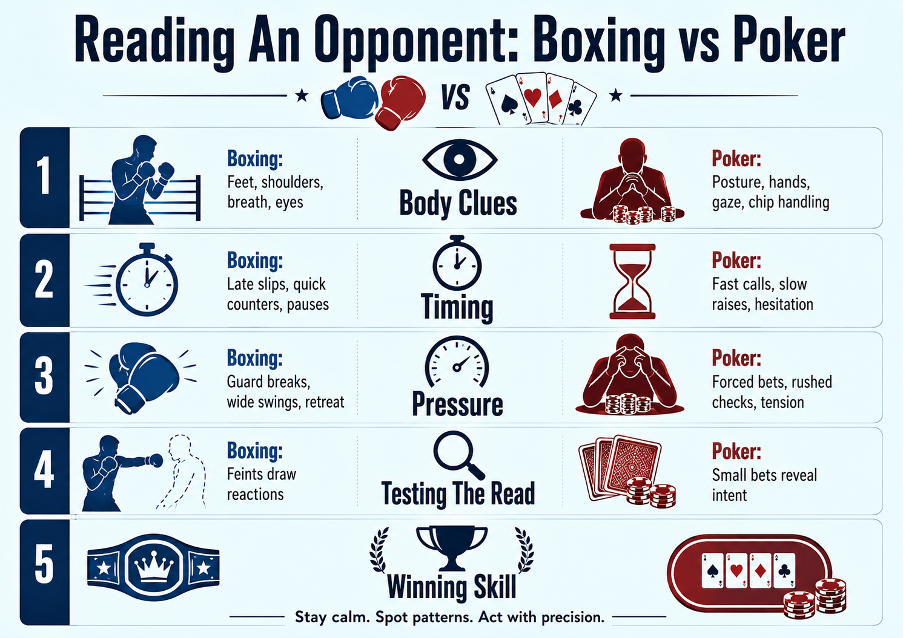
Pressure makes clean habits look rough. A boxer who starts loose may lift his chin after a hard body shot. He may pull straight back. He may swing wide because he wants space. The ring then becomes smaller, even if the ropes have not moved.
At the poker table, pressure works through chips, silence, and risk. A player may protect a weak hand with a large bet. He may check too fast to look calm. He may stare at the pot as if he already owns it. Stress turns small acts into loud signs.
“Under pressure, people often stop hiding who they are. They show what they fear.”
The reader must stay cold. He cannot fall in love with one clue. He must test it. In boxing, he may feint and watch the guard rise. In poker, he may change bet size and watch the response.
Pressure does not create truth by itself. It reveals habits. The sharp opponent sees those habits first.
Feints Turn Reading Into Action
Reading means little without a test. A boxer uses a feint to ask a question. Will the guard rise? Will the back foot move? Will the counter come from the right side? A small shoulder twitch can pull out a large answer.
Poker has its own feints. A player may check to invite a bet. He may raise small to test strength. He may pause to see who grows tense. Each move gathers fresh proof.
The key is control. A reckless feint wastes energy. A reckless bet wastes chips. A good test costs little and shows much. It opens a door without forcing the reader to walk through it.
This is where skill beats instinct. Instinct reacts. Skill probes. Instinct swings at noise. Skill waits for shape.
The Best Readers Stay Calm
Boxing and poker look far apart. One uses gloves. The other uses cards. Yet both test the same core skill: reading a person under pressure.
A boxer reads feet, breath, shoulders, and timing. A poker player reads posture, pace, silence, and bets. Neither trusts one sign alone. Each waits for a pattern. Each tests the pattern with a small move.
The best readers do not guess wildly. They stay calm. They watch closely. They let the opponent speak through action. Then they strike, raise, step back, or wait.
In the ring and at the table, sharp eyes beat loud moves. The winner often sees the truth first.